• 0 Posts
  • 39 Comments
Joined 1 year ago
cake
Cake day: September 14th, 2025

help-circle
  • The tech could represent the end of visual fact — the idea that video could serve as an objective record of reality — as we know it.

    We already declared that with the advent of photoshop.

    I think that this is “video” as in “moving images”. Photoshop isn’t a fantastic tool for fabricating video (though, given enough time and expense, I suppose that it’d be theoretically possible to do it, frame-by-frame). In the past, the limitations of software have made it much harder to doctor up — not impossible, as Hollywood creates imaginary worlds, but much harder, more expensive, and requiring more expertise — to falsify a video of someone than a single still image of them.

    I don’t think that this is the “end of truth”. There was a world before photography and audio recordings. We had ways of dealing with that. Like, we’d have reputable organizations whose role it was to send someone to various events to attest to them, and place their reputation at stake. We can, if need be, return to that.

    And it may very well be that we can create new forms of recording that are more-difficult to falsify. A while back, to help deal with widespread printing technology making counterfeiting easier, we rolled out holographic images, for example.

    I can imagine an Internet-connected camera — as on a cell phone — that sends a hash of the image to a trusted server and obtains a timestamped, cryptographic signature. That doesn’t stop before-the-fact forgeries, but it does deal with things that are fabricated after-the-fact, stuff like this:

    https://en.wikipedia.org/wiki/Tourist_guy


  • That depends on how you define the web

    Wikipedia:

    https://en.wikipedia.org/wiki/Gopher_(protocol)

    The Gopher protocol (/ˈɡoʊfər/ ⓘ) is a communication protocol designed for distributing, searching, and retrieving documents in Internet Protocol networks. The design of the Gopher protocol and user interface is menu-driven, and presented an alternative to the World Wide Web in its early stages, but ultimately fell into disfavor, yielding to Hypertext Transfer Protocol (HTTP). The Gopher ecosystem is often regarded as the effective predecessor of the World Wide Web.[1]

    gopher.floodgap.com is one of the last running Gopher servers, was the one that I usually used as a starting point when firing up a gopher client. It has a Web gateway up:

    https://gopher.floodgap.com/gopher/

    Gopher is a well-known information access protocol that predates the World Wide Web, developed at the University of Minnesota during the early 1990s. What is Gopher? (Gopher-hosted, via the Public Proxy)

    This proxy is for Gopher resources only – using it to access websites won’t work and is logged!



  • How many of you out there are browsing the web using Gofer?

    Gopher predated the Web.

    I do agree that there have been pretty major changes in the way websites worked, though. I’m not hand-coding pages using a very light, Markdown-like syntax with <em></em>, <a href=""></a>, and <h1></h1> anymore, for example.


  • before they agreed to fix the price at $1 in September.

    Probably not going to be enforced, given the context, but I believe that this is illegal.

    https://en.wikipedia.org/wiki/Price_fixing#United_States

    Price fixing is an anticompetitive agreement between participants on the same side in a market to buy or sell a product, service, or commodity only at a fixed price, or maintain the market conditions such that the price is maintained at a given level by controlling supply and demand.

    In the United States, price fixing can be prosecuted as a criminal federal offense under Section 1 of the Sherman Antitrust Act.[3]

    Criminal prosecutions must be handled by the U.S. Department of Justice, but the Federal Trade Commission also has jurisdiction for civil antitrust violations. Many state attorneys general also bring antitrust cases and have antitrust offices, such as Virginia, New York, and California. Further, where price fixing is used as an artifice to defraud a U.S. government agency into paying more than market value, the U.S. attorney may proceed under the False Claims Act.

    Private individuals or organizations may file lawsuits for triple damages for antitrust violations and, depending on the law, recover attorneys fees and costs expended on prosecution of a case.[4][5] If the case at hand also violates the False Claims Act of 1863, in addition to the Sherman Act, private individuals may also bring a civil action in the name of the United States under the Qui Tam provision of The False Claims Act.

    Under American law, exchanging prices among competitors can also violate the antitrust laws. That includes exchanging prices with the intent to fix prices or the exchange affecting the prices individual competitors set. Proof that competitors have shared prices can be used as part of the evidence of an illegal price fixing agreement.[5] Experts generally advise that competitors avoid even the appearance of agreeing on price.[5]


  • I don’t see why it would need to be affected.

    The constraint to require a valid signing isn’t something imposed by the license on the Android code. If you want to distribute a version of Android that doesn’t check for a registered signature, that should work fine.

    I mean, the Graphene guys could impose that constraint. But they don’t have to do so.

    I think that there’s a larger issue of practicality, though. Stuff like F-Droid works in part because you don’t need to install an alternative firmware on your phone — it’s not hard to install an alternate app store with the stock firmware. If suddenly using a package from a developer that isn’t registered with Google requires installing an alternate firmware, that’s going to severely limit the potential userbase for that package.

    Even if you can handle installing the alternate firmware, a lot of developers probably just aren’t going to bother trying to develop software without being registered.


  • You can get inkjet printers that don’t have restrictions on the ink. They cost more, though.

    The reason printer manufacturers are so hell-bent on being a pain in the ass with the ink is because they’re using a razor-and-blades model. They’re selling you the printer at a lower price than they really should, if their price reflected their costs, with the expectation that they’ll make their money back when you buy ink at a higher price than you really should, because people pay more attention to the the initial price of the printer than to the consumable costs.

    Same way you can get unlocked cell phones instead of network-locked cell phones with a plan. Gaming PCs instead of consoles. It’s not that they’re unavailable, but you’re gonna have to accept a higher up-front cost, because you’re not getting a subsidy from the manufacturer.

    Canon sells a line of inkjet printers that just take ink from a bottle. No hassles with restrictions on ink supply there. The ink is cheap, and there are third-party options that are even cheaper readily available…but you’re going to pay full price for the printer.

    https://www.usa.canon.com/shop/printers/megatank-printers

    Their lowest-end “MegaTank” printer is $230:

    https://www.usa.canon.com/shop/p/megatank-pixma-g3290

    A pack of third-party ink refill bottles is $15, and will print (using Canon’s metrics), about 7,700 color pages and 9,000 black-and-white pages:

    https://www.amazon.com/Refill-Compatible-Bottles-MegaTank-4-Pack/dp/B0DSPSS5W7

    Compatible GI-21 Black Ink Bottle Up to 9,000 pages, GI-21 Cyan/Magenta/Yellow Ink Bottles Up to 7,700 pages

    On the other hand, Canon’s lowest-end “cartridge” printer, where they use the razor-and-blades model, is $55.

    https://www.usa.canon.com/shop/p/pixma-ts3720-wireless-home-all-in-one-printer

    But you rapidly pay for it with the ink; It looks like they presently sell a set of replacement cartridges for $91. And that set will print a tiny fraction of the number of pages that the above ink bottles will print.

    page yield of 400 Black / 400 Color pages per ink cartridge set and cost of $90.99 for a value pack of PG-285(XL) and CL-286(XL) ink cartridges (using Canon Online Store prices as of June 2025).

    So if you really do want to do photo prints with an inkjet without dealing with all the DRM-on-ink stuff, you can do it today. But…you’re going to pay more for the printer.

    All that being said, I do think that lasers are awfully nice in that you don’t need to deal with nozzles clogging. You can leave a laser printer for years and it’ll just work when you start it up. If you don’t need photo output, just less hassle.


  • I’m the other way. I’d rather have battery life on cell phones, and turn the refresh rate down.

    On a desktop, where the power usage is basically irrelevant, then sure, I’ll crank the refresh rate way up. One of the most-immediately-noticeable things is the mouse pointer, and that doesn’t exist on touch interfaces.


  • I have a feeling its mostly due to some audio and video hardware that has some real longevity. I’ve got a VHS+minidv player that I am transferring old videos from using FireWire (well, for the minidv. VHS is s-video capture).

    Yeah, that’s a thought…though honestly, unless whatever someone is doing requires real-time processing and adding latency is a problem, they can probably pass it through some other old device that can speak both Firewire and something else.

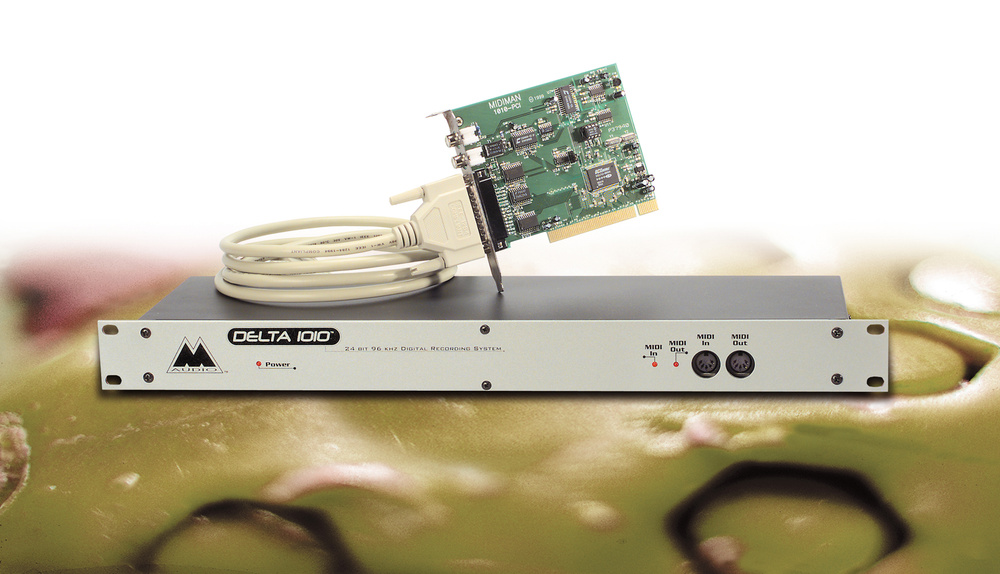
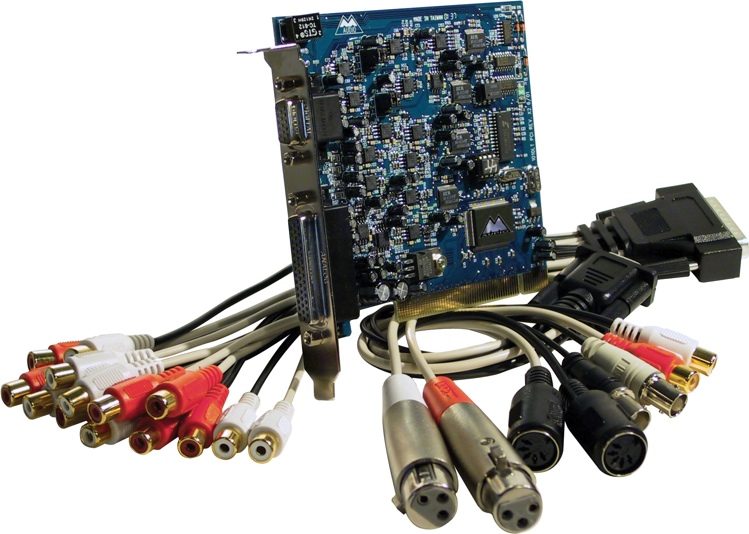
    Probably the m-audio delta 1010

    That doesn’t have a Firewire interface, does it? I thought I had one of those.

    checks

    Oh, I’m thinking of the 1010LT, not the 1010. That lives on a PCI card.


  • If it’s Linux, sounds like it should just work out of box, at least for a while longer.

    https://www.tomshardware.com/news/linux-to-support-firewire-until-2029

    Linux to Support Firewire Until 2029

    The ancient connectivity standard still has years of life ahead of it.

    Firewire is getting a new lease on life and will have extended support up to 2029 on Linux operating systems. Phoronix reports that a Linux maintainer Takashi Sakamoto has volunteered to oversee the Firewire subsystem for Linux during this time, and will work on Firewire’s core functions and sound drivers for the remaining few that still use the connectivity standard.

    Further, Takashi Sakamoto says that his work will help users transition from Firewire to more modern technology standards (like perhaps USB 2.0). Apparently, Firewire still has a dedicated fanbase that is big enough to warrant six more years of support. But we suspect this will be the final stretch for Firewire support, surrounding Linux operating systems. Once 2029 comes around, there’s a good chance Firewire will finally be dropped from the Linux kernel altogether.