
https://lemmy.today/post/63260938
I submitted a post on it about three hours before your comment.
The issue was just resolved, though.

Off-and-on trying out an account over at @[email protected] due to scraping bots bogging down lemmy.today to the point of near-unusability.
https://lemmy.today/post/63260938
I submitted a post on it about three hours before your comment.
The issue was just resolved, though.

VPNs are more or less a commodity; the service is pretty interchangeable among providers, and so the market is competitive. I think that it’d be hard for someone to charge a lot more for a service and get many customers. Too easy to just use one of the other providers.
It says “potentially impacted” on the Microsoft status page. Might be that it’s not 100% of users.
Both Kimberly Powell (Nvidia vice president) and Alice Huang (spy) were married, though it sounds like at least the spy’s husband was apparently aware of what was going on.
A Mystery Businessman Introduced Jensen Huang to His Paramour. It Was Her Husband.
Kang Wei appeared to accept that his wife Alice Huang was in a romantic relationship and spoke openly of her closeness to the Nvidia chief
https://www.cnbc.com/2026/11/11/nvidia-jensen-huang-affair-employee.html
Rumors of an affair between Huang and Powell have circulated for years, in part because Powell lacks a background in health or science, according to a former employee who asked not to be named because of the sensitivity of the matter.
If she got her vice president position more on the basis of being a nice lay for Jensen Huang than because she was qualified for it, that does sound like a potential issue for the company, even aside from the affair itself.
I kind of think that it’s more likely to result in expanded VPN use.
NVDA is NVidia’s stock ticker symbol.
One spy and one executive.
Jensen’s interactions with Ms. Huang are not unusual or unexpected" and are part of Jensen Huang’s job, an Nvidia spokesperson told ABC News at the time.
Guess I can’t dispute that statement!
Probably some distant cousin.
The CEO of AMD, Lisa Su, is in there too!
https://en.wikipedia.org/wiki/Lisa_Su
Relatives: Jensen Huang (first cousin once removed)
Sure thing. If you’ve ever purchased Crucial memory, that’s their “consumer” brand, where they make the DIMMs themselves, so you’ll have some of their memory chips. There was a lot of outrage on here that they stopped doing that during the RAM shortage, prioritized filling B2B demand first.
There are also third-party DIMM manufacturers like PNY (also US-based) that make DIMMs with chips from memory chip manufacturers, and they might be using Micron memory chips as well.
If you’re on Linux, you can check what’s in your system at the DIMM level without pulling it open with:
$ sudo dmidecode -t memory
I don’t know if there’s a way to see where the chips on a third-party DIMM come from — like, potentially Micron, with a third-party manufacturer — without actually looking at the chip.
Silicon allocation?
https://en.wikipedia.org/wiki/Micron_Technology
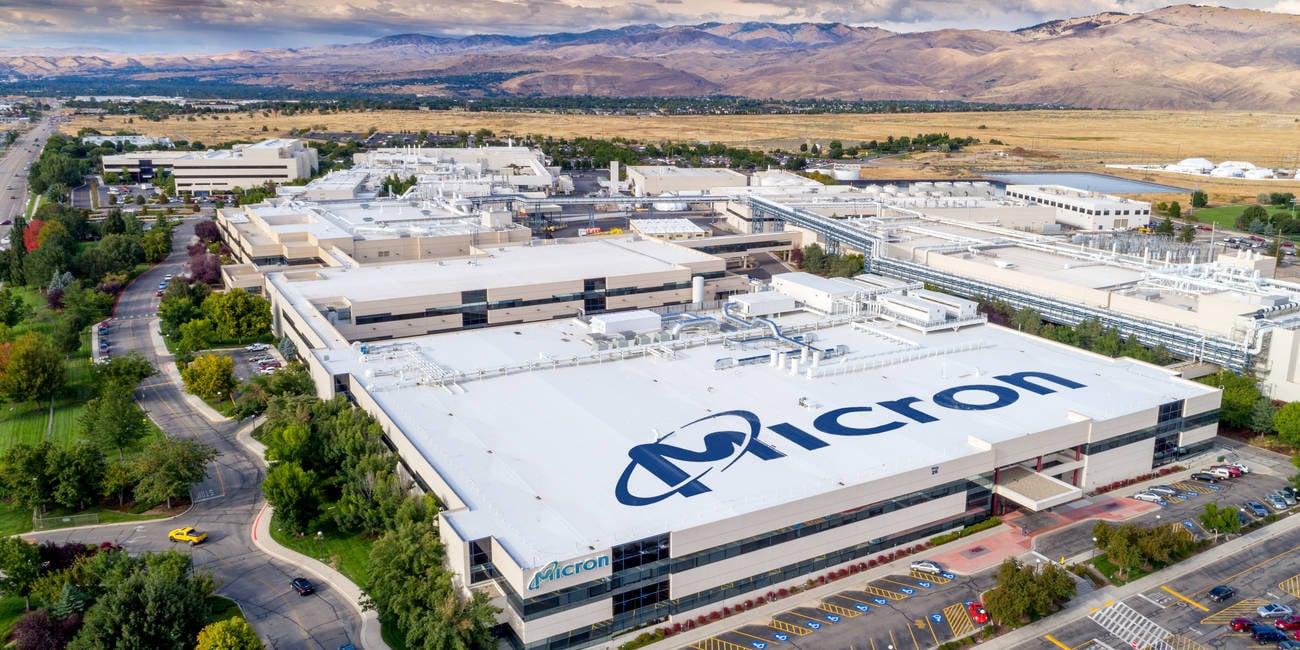
Micron Technology, Inc. is an American multinational semiconductor company that manufactures computer memory and computer data storage products, including dynamic random-access memory (DRAM), flash memory, High Bandwidth Memory (HBM), and solid-state drives (SSDs). Founded in 1978 in Boise, Idaho, Micron is the only major American computer memory manufacturer.[3] It is one of the “Big Three” computer memory manufacturers, along with the South Korean companies Samsung Electronics and SK Hynix.[4]
They have fabs in the US (and are building more).
https://www.micron.com/us-expansion/
Micron is accelerating its U.S. fab and technology investments, increasing its planned spend to more than $250 billion through 2035, driven by surging demand for memory in the AI era. These investments reflect Micron’s confidence in its technology leadership and are designed to support its long-term goal of producing 40% of its DRAM in the U.S. while creating additional good-paying jobs.
It’s an interesting strategy if you’re Taiwan.
https://en.wikipedia.org/wiki/Silicon_shield
Silicon shield is the principle in geopolitical relations regarding Chinese unification that the semiconductor industry in Taiwan is important enough to global economic prosperity that it would deter an attempt by China to seize Taiwan by force, and if not would induce foreign powers, particularly the United States, to defend Taiwan in order to preserve the stability of the semiconductor supply chain.
I’m spitballing here, but one way it might be possible for TMSC (or whoever puts up the capital, which doesn’t have to necessarily be TMSC) to mitigate risk, given that this is Nvidia allegedly talking to them, is to build some kind of new memory specialized for AI use that would displace existing memory for AI use. Like, for neural nets, you don’t have the same constraints that you do on conventional DRAM. If you can have someone who builds neural net systems and a memory maker work together, you might be able to produce a new sort of memory that would be a better buy for neural net users.
A few things I can list off-the-cuff:
Access patterns on neural nets are predictable long in advance. That means latency doesn’t matter much (so having far higher latency than current memory may be fine) and requesting large blocks of memory might be valuable. Accesses will be sequentially requesting memory over a large range, so it also may mean that one could change how cooling works in the memory, if one has some guarantees on a single spot not being frequently re-requested a lot. A given byte of memory won’t be re-written, once written, for a long time, so you could relax how rapidly the hardware needs to be able to sequentially do writes to a given byte.
You have a lower ratio of writes to reads. I read one article talking about how HBM isn’t yet optimized for AI use on write/read bandwidth availability grounds. That’s talking about the memory interface, not the memory chip itself; they were just arguing for changing the ratio of bandwidth reserved for writes and reads. However, I would bet that you could also optimize the memory chip around this.
So you’d basically come up with, I dunno, “neural net memory (NNM)” or something like that. It’s not that you have to use it for neural nets, but that its characteristics would be optimized for neural net use. That only makes sense if there’s enough scale of demand for a single application to put engineering time in, expend the fixed costs, but there is presently a lot of demand, and might be more down the road.
That doesn’t make risk of demand dropping go away, but…it’d tend to shift that risk to conventional memory manufacturers, since if demand doesn’t meet expectations and you’re doing neural nets, a buyer would probably buy the specialized memory chip before the non-specialized memory chip. Still risk, but it’d be shifted to Micron/SK Hynix/Samsung.
At the start of the AI boom, we had hardware that was not optimized for AI use. It was generic random access memory with most of the hardware stack designed for rendering 3D graphics. I’d guess that it’s very likely that that hardware stack is substantially different from one optimized for neural net use, and I’d bet that Nvidia would be the most-likely party to be at the heart of attempts to re-engineer the hardware stack to optimize it, as that’s somewhere that they’re uniquely-well-positioned to make changes.
EDIT: I remember a while back when John Carmack was tossing the idea out there of using a loop of fiber-optic cable as a memory for AI use. That may not be the optimal design, but one does see that there is a lot of room to think about specializing the memory to the very different demands that neural nets place on memory rather than the demands that conventional RAM users have.
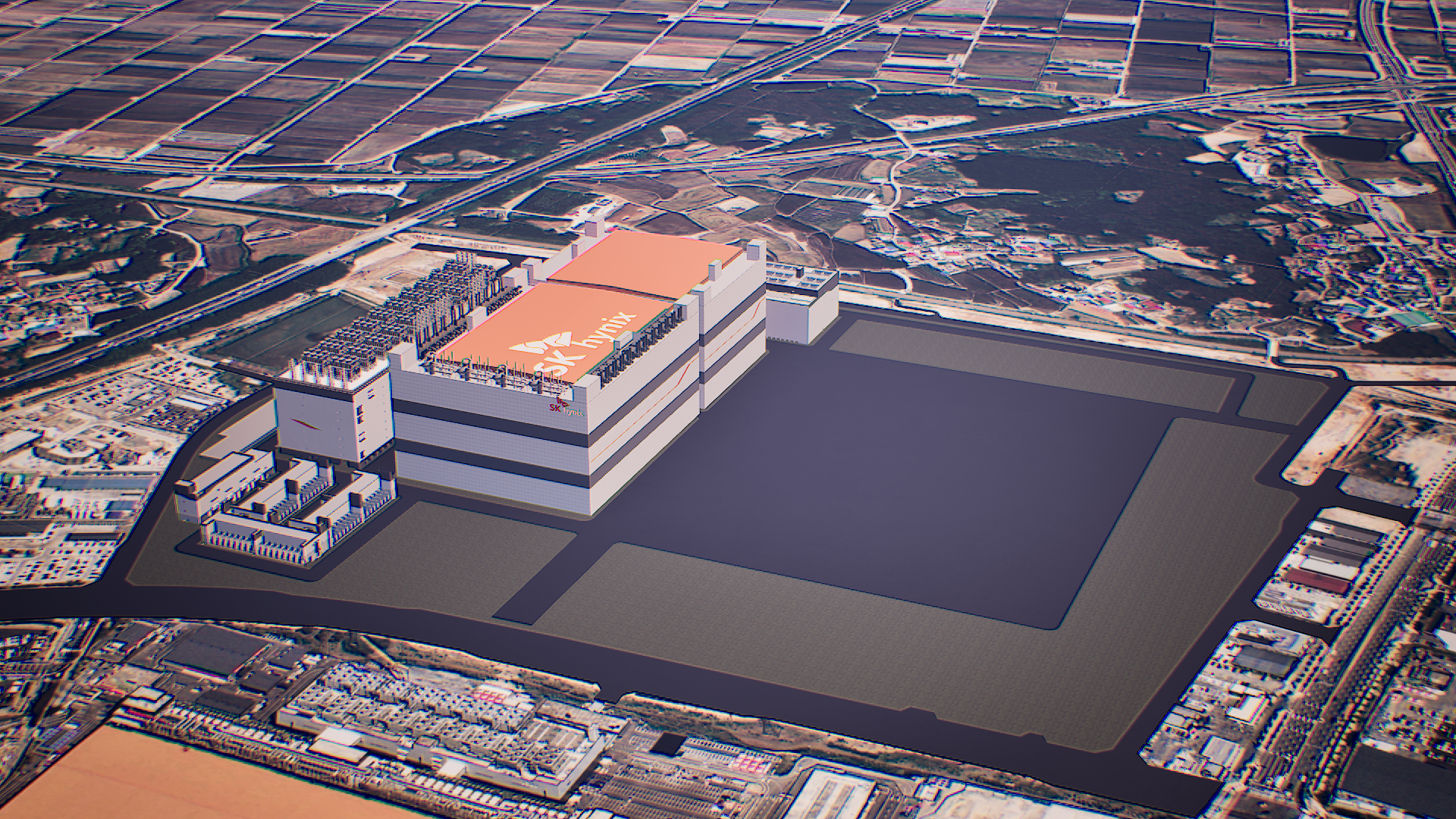
It takes an already-existing memory manufacturer 4–5 years to do a new factory.
I don’t know how much longer it’d take a non-memory manufacturer, but presumably more.
I’m not saying that this would be bad, but I’d expect that it’d be some way in the future if it happens.
A data center in international waters is immensely more practical in most regards, if legal jurisdiction is your complaint.
Setting aside economic impact, I’m skeptical that this is actually a good idea, purely in terms of political capital.
Like…here in the US, gas taxes have a wildly-disproportionate political impact, in part because they’re constantly thrown in your face. Signs all over outdoors with them.
If every time a French user of Steam, say, wants to download a game that they already bought and they’re presented with a fee from Steam or something, I think that that’s probably going to make the tax highly-visible to French voters, and probably unpopular.
It looks like Call of Duty is over 1TB. Okay, so Valve is probably telling you to pay your 55 euro or whatever French Internet Tax every time you want to install the game. That’s probably going to generate upset pretty quickly.
If that goes through, it’s going to make local caching a lot more financially-appealing in France.







It’s resolved now, but I saw some spokesman doing a press conference saying that there were two areas in the US that were still working, but he said that he wasn’t sure that he was cleared to release the two areas and didn’t, at least at that time.
I was thinking that ADS-B data would probably make it kinda obvious.