

6·
1 year agoApparently not canceled
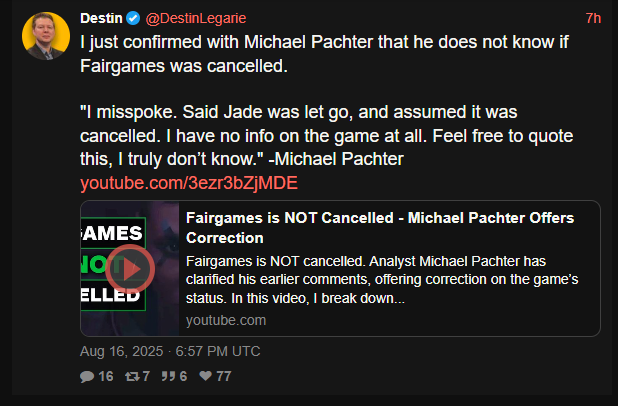
Apparently not canceled
Possible, but I think that particular feature is more aimed at EU electrical prices.
Fix would be government regulation.
Alternatives are sending cash by mail, accepting bank ACH, and of course, cryptocurrency.
Yeah, I feel the same. Revolt Chat is just an eventual Discord 2 if it gains traction. It doesn’t really matter how open-source it is. It is centralized, and so will eventually need funding for hosting. Without the ability to run my own server and everyone be able to connect to it in their clients, it’s not a valid alternative.
Any other alternatives I’m unaware of to look into? Or are we just SOL?
I think Discord bridging requires encryption to be off, unfortunately, and I personally see bridging as the only way for Matrix to overcome the network effects of Discord.
Oh wow, that’s before my time. Thanks for sharing its existence with me.
Alternatives that move us backwards towards the old days are things like TeamSpeak/Mumble/Ventrilo.
Alternatives that are similar to Discord and not owned by a for-profit company are:
A huge missing piece of almost all not-for-profit alternatives is a lack of low-latency game streaming / screen streaming. The best Matrix gets is running a jitsi meet. I think Matrix is the only one that theoretically could work for some users because Discord bridges allow people who are finally fed up to move to Matrix for text chat.
It’s difficult, though.
Trade offer:
I receive: Your next paycheck
You receive: 8.3% faster graphics
Competition has grown in the industry and long-term live-service black hole games have captured parts of the potential purchase-base so wholly that they don’t really spend elsewhere.
Game companies have plenty of methods for bringing costs down, but making games faster gives you more attempts at a very competitive market. (Some) Indie games are sort of proving this right. If you make a relatively quality game in a short time period and release it for a relatively good price, you can get your foot in the door of the market. If you spend 5+ years making the biggest game you’ve ever made and it sucks, your studio dies.
The big question is if AAA shifts to making games faster, are they going to be of a high enough quality to justify the outrageous price publishers will still want to set for them? (easy: no)
Basically I see it as the industry splitting even further. The AAA games that make money will continue to do so only so long as their last game lets them float 5+ year dev cycles. Otherwise, companies and publishers are going to reduce risk and investment and push developers to make their game faster, get to market faster. Arguably that would be healthy for the industry, but I know it won’t be.